

Currently Taking
(Fullscript — Medication & Supplement Reconciliation Tool)
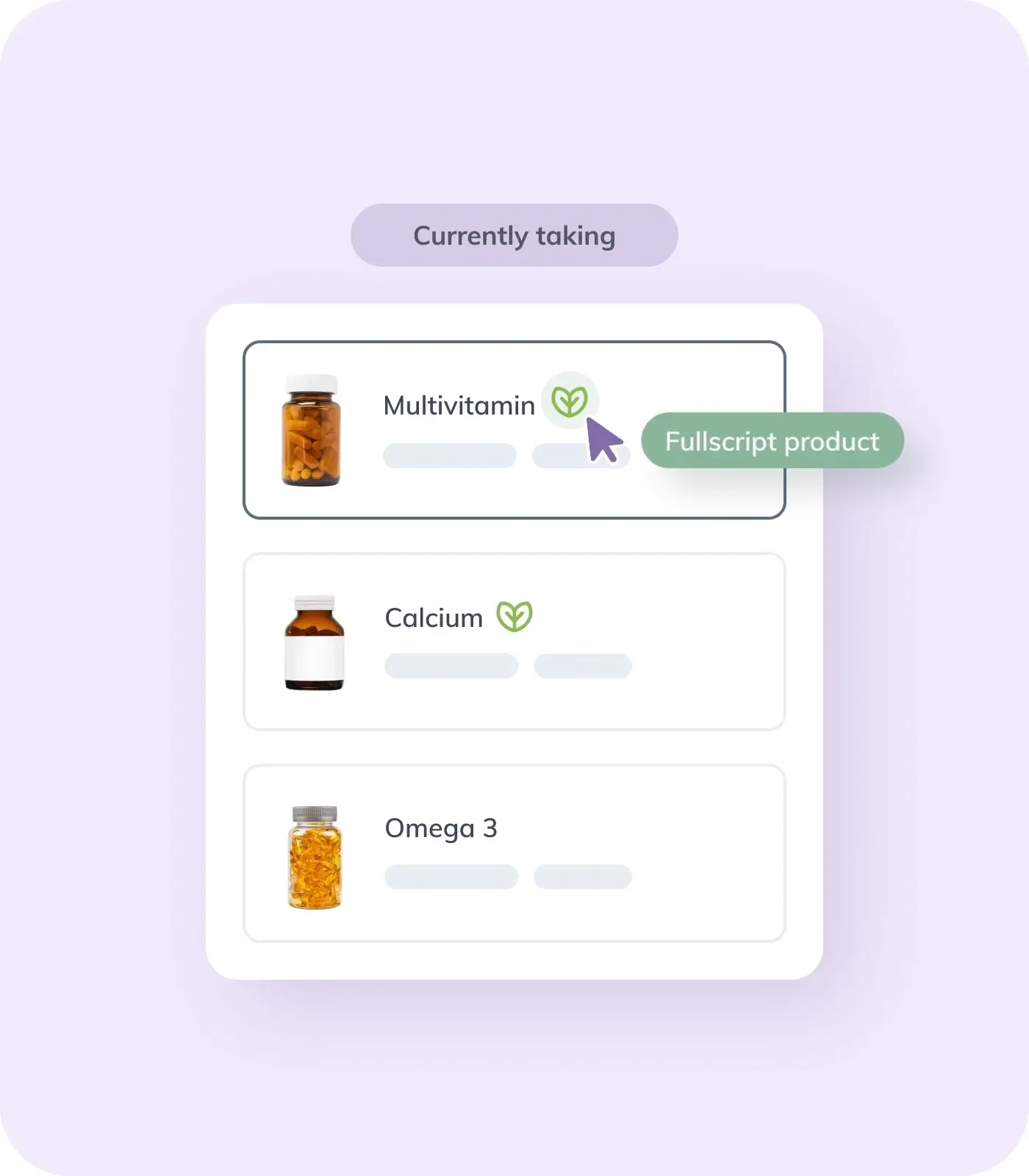
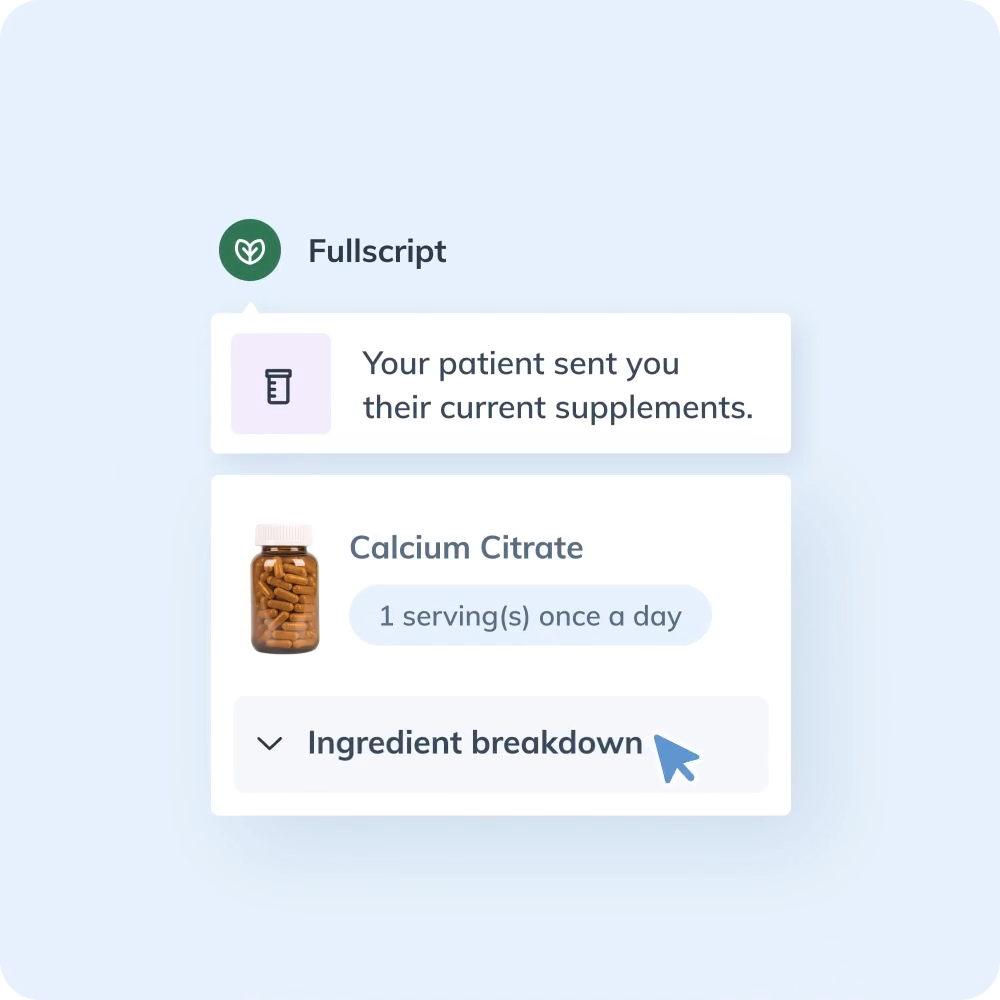
The first patient-driven supplement reconciliation feature in the industry.
Enabling patients to log what they’re already taking directly from their phone.
About this project
Product: iOS App + Web (patient experience)
Users: Patients receiving care through practitioners using Fullscript
Timeline: August to October, 2023
My Role: End-to-end design of patient-side intake flow (research → interaction model → shipped UI)
Team: PM, Engineering, Clinical advisor
Constraints: Low patient engagement, medical liability, limited supplement data variability
Outcome: First flagship differentiator feature for patient engagement
WHY — The Root Problem
Before this feature:
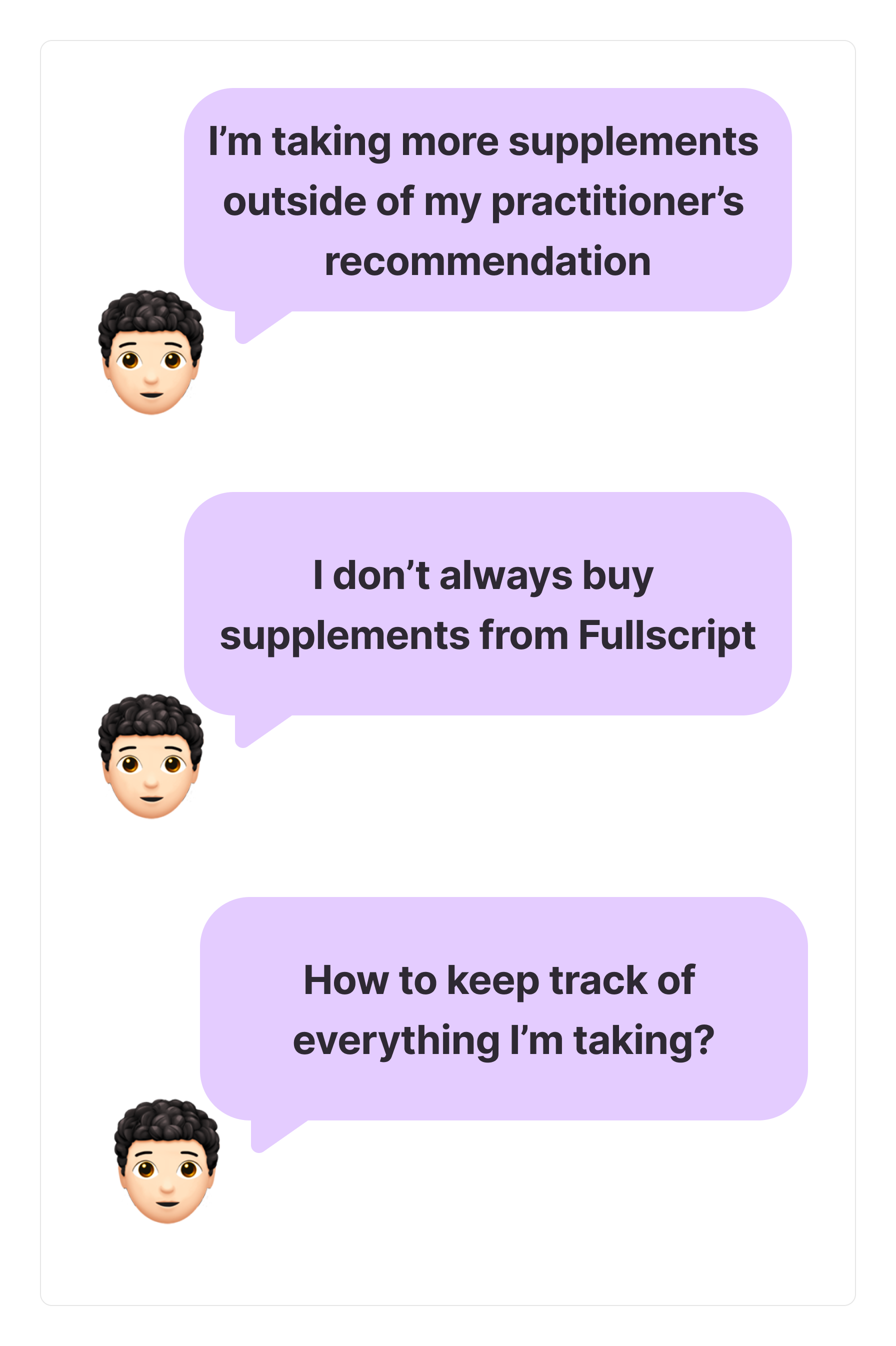
Practitioners had incomplete visibility into what patients were already taking.
Patients had no structured way to share their supplement history.
Fullscript was a prescribing tool, not a shared health ecosystem.
Critically, supplement tracking lived outside the platform.
If this didn’t happen:
Fullscript would remain practitioner-centric, limiting patient engagement and weakening its position as a comprehensive care platform.
This was a strategic opportunity to differentiate in-market.
What—
The Core Idea
Enable patients to proactively add and manage their “Currently Taking” supplements directly from their phone — before or between practitioner visits.
It introduced a new mental model:
Patients are contributors to their protocol, not passive recipients.
Putting patients in the co-pilot seat with the practitioner.
They co own their healthy joureny
From prescription-only → ecosystem awareness
From practitioner input → shared visibility
From static order history → living supplement state
This feature became the foundation for two-sided transparency.
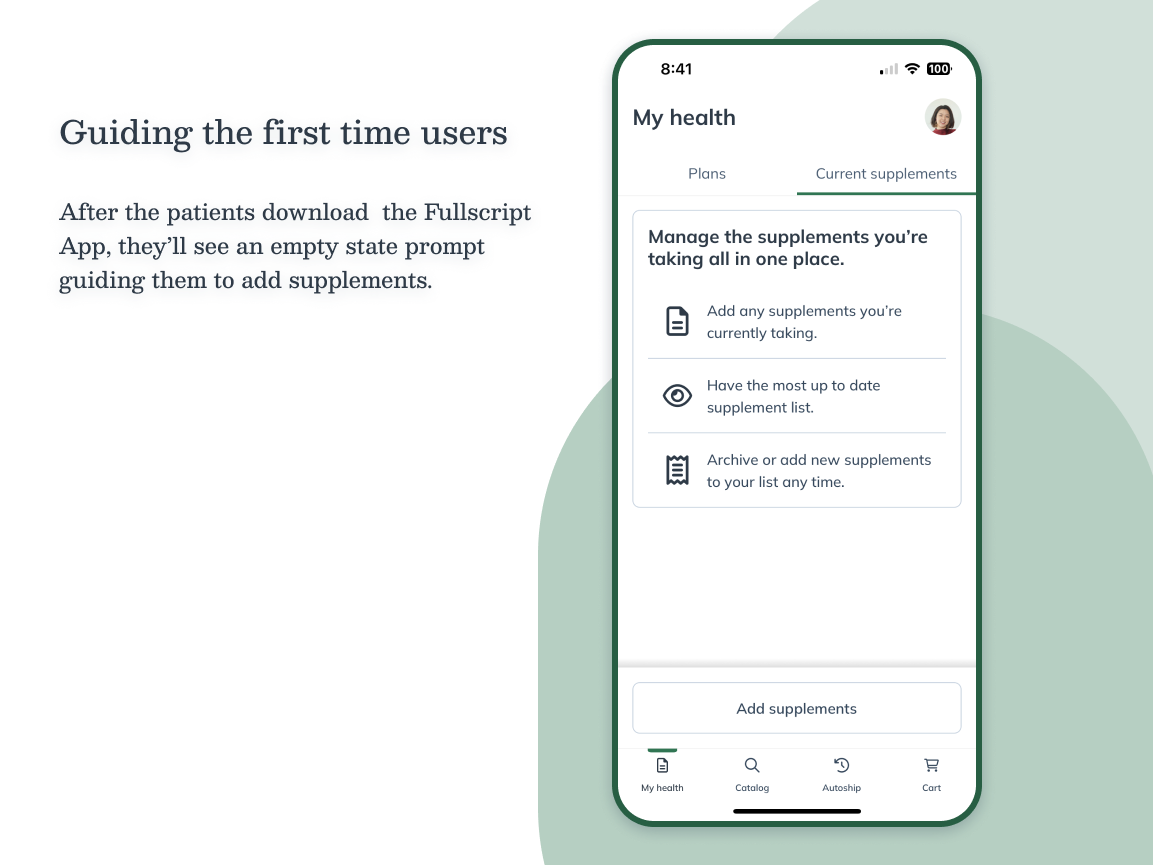
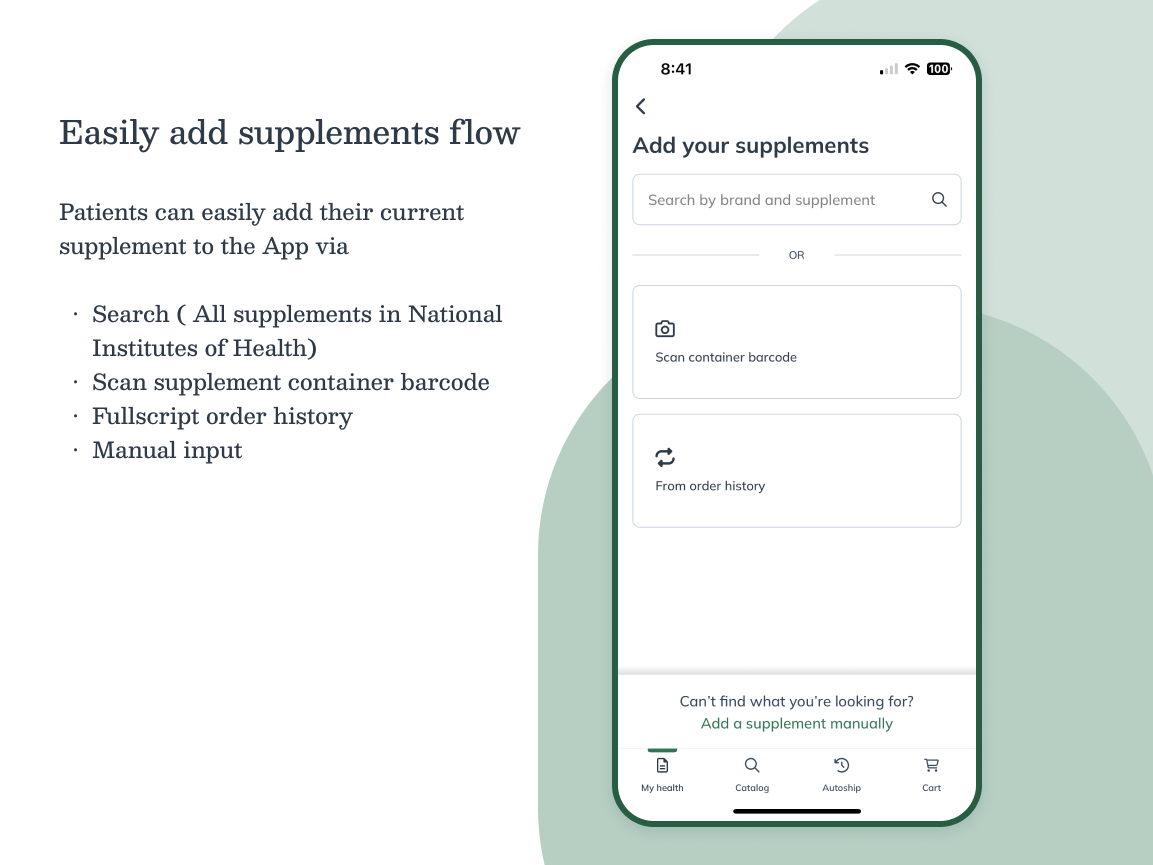
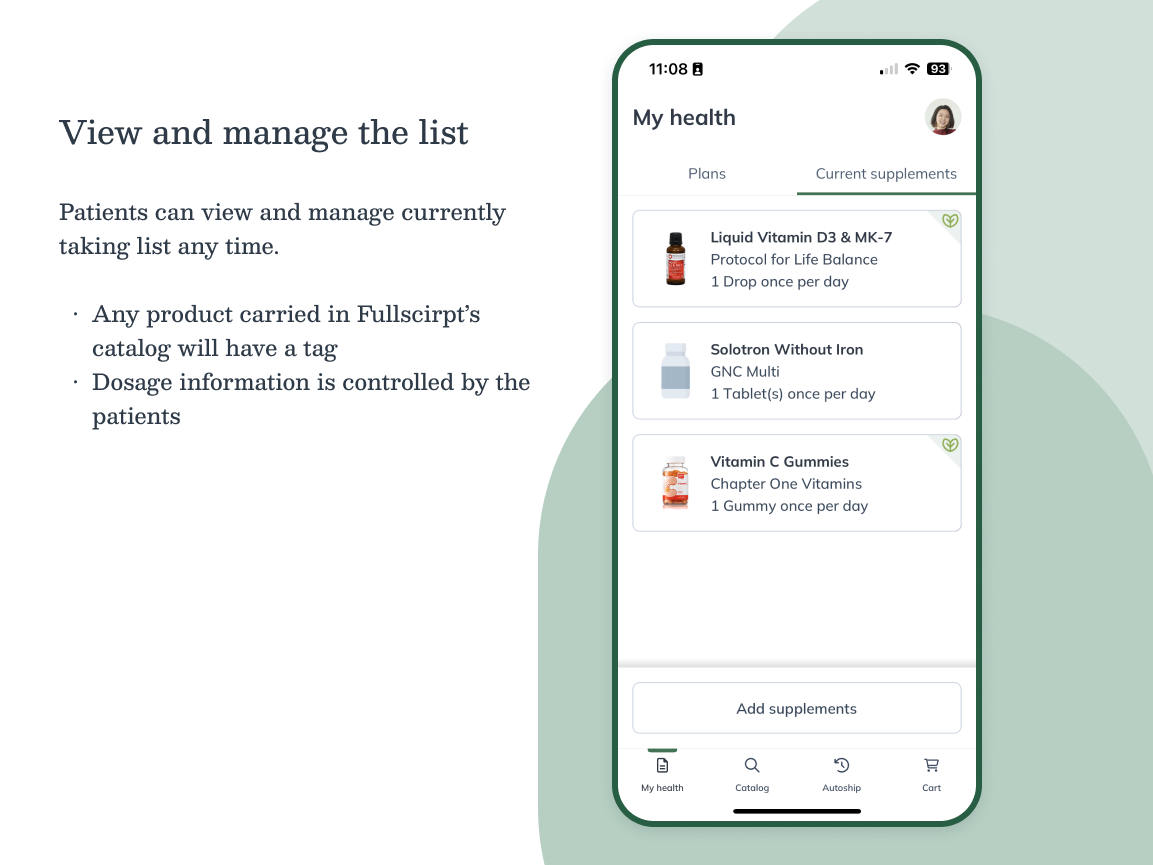
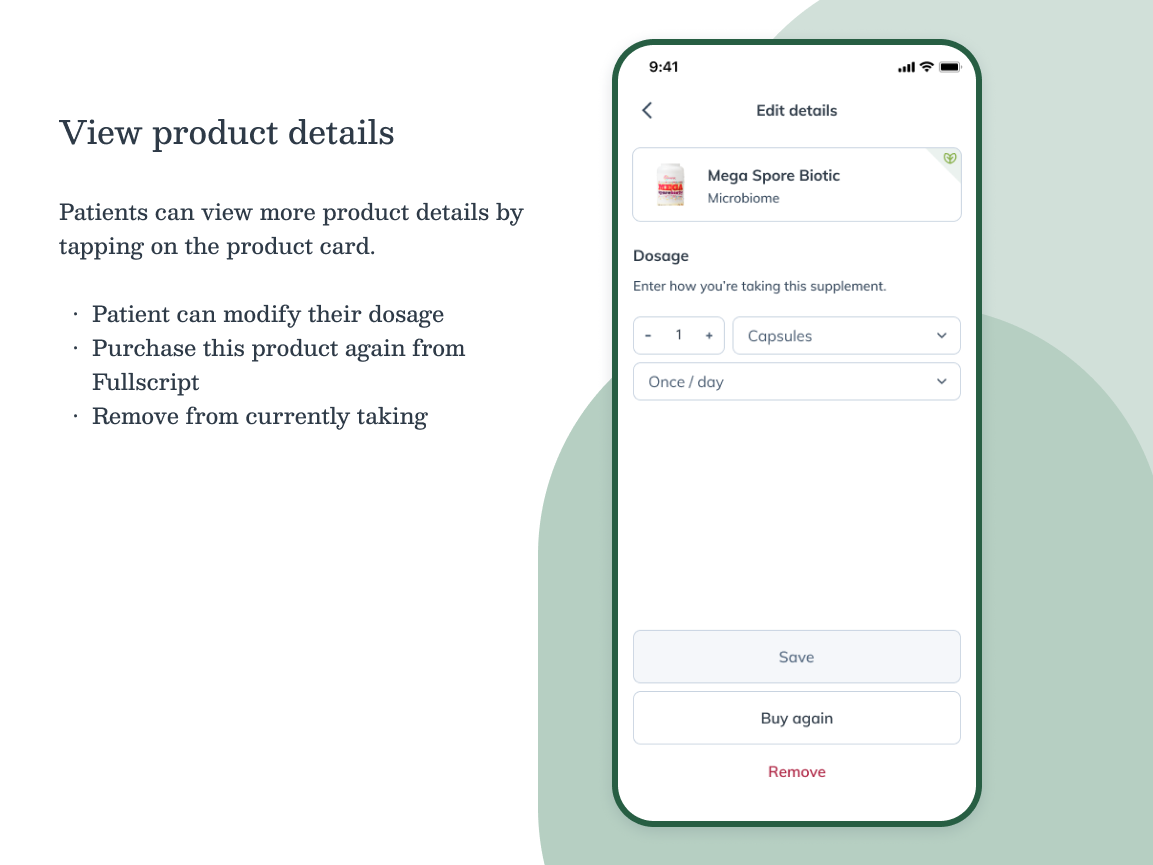
HOW : Key Decisions & Tradeoffs
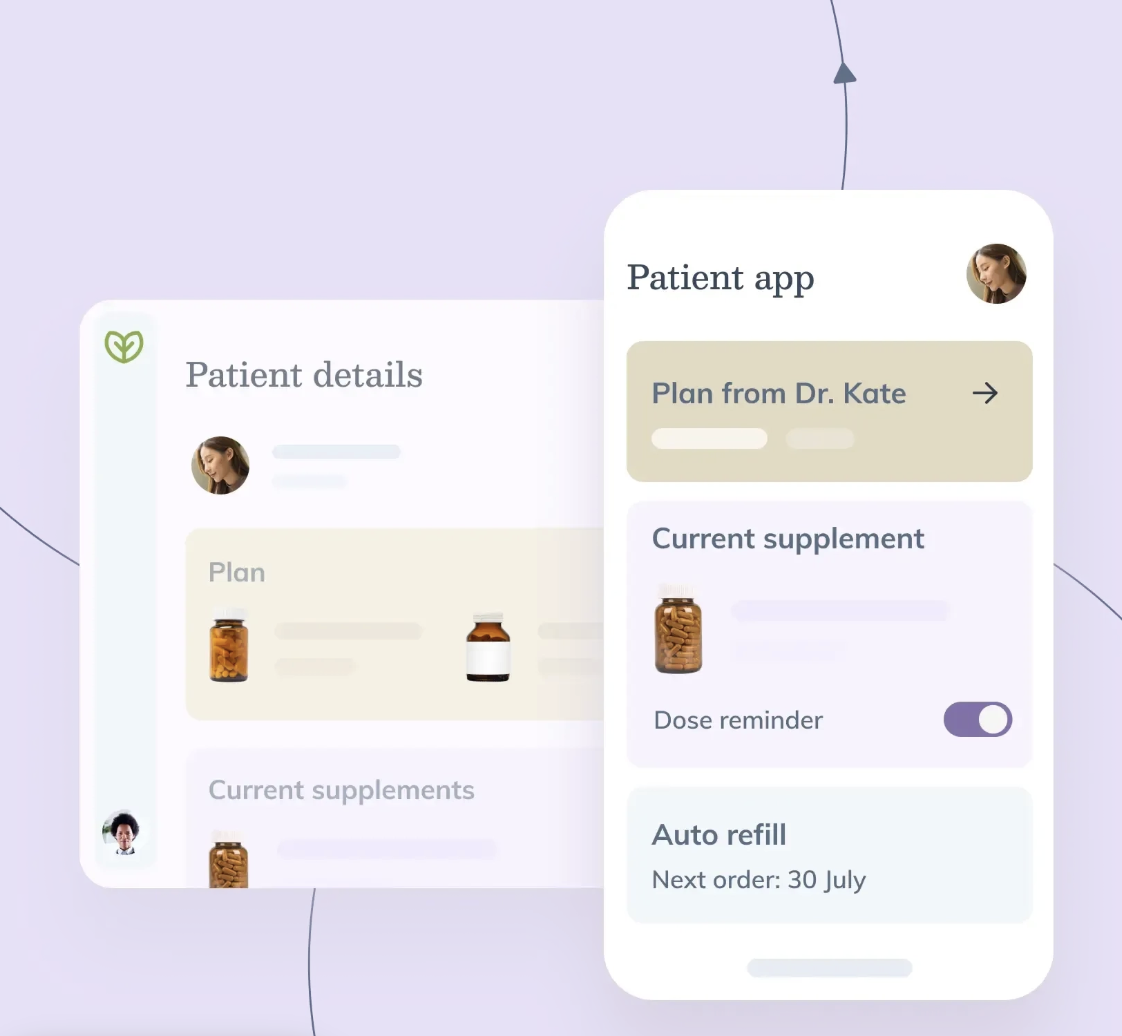
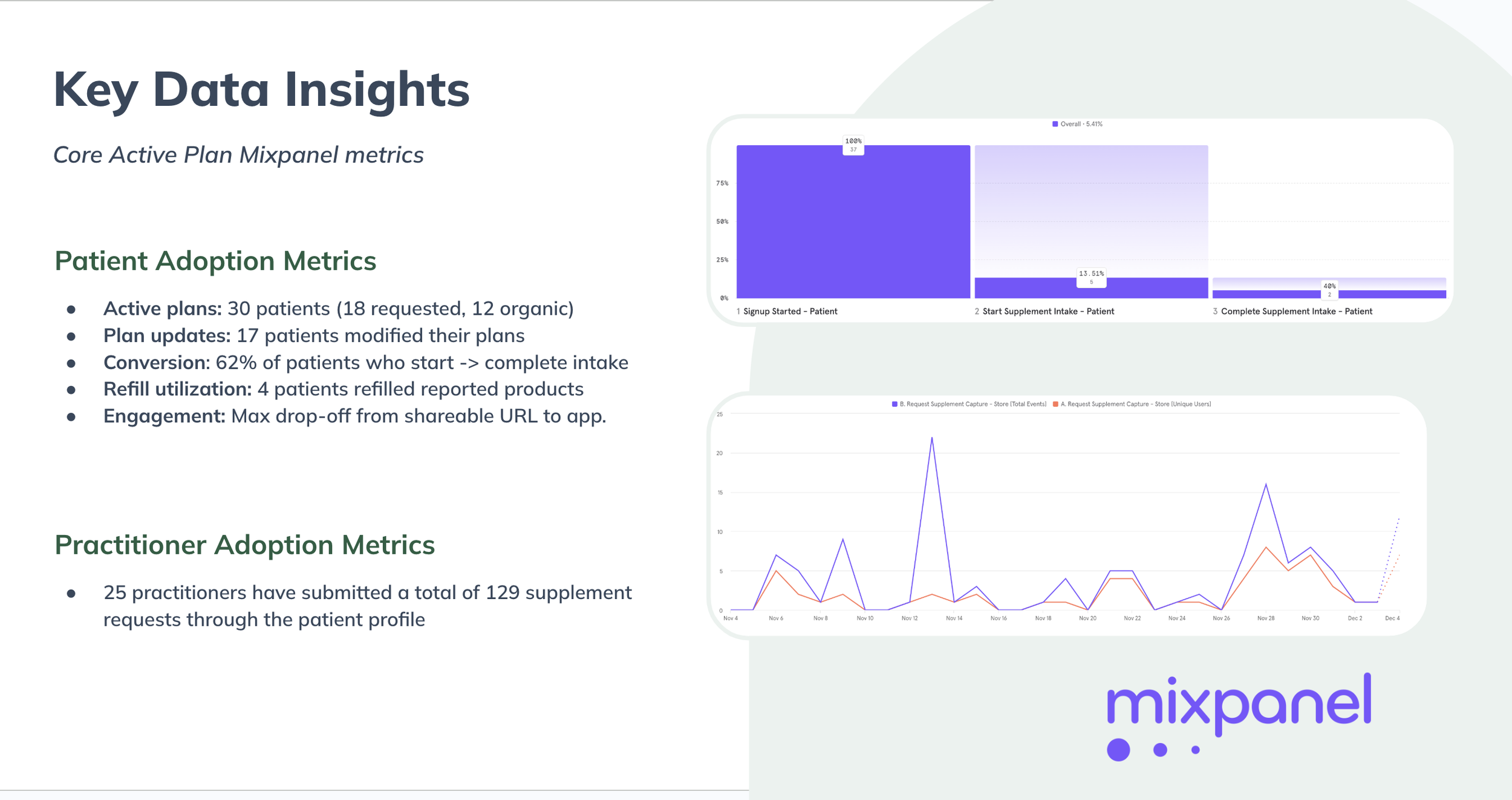
Rather than launching broadly, we rolled out “Currently Taking” through a controlled beta with 21 practitioners and their patients across diverse clinic types. This approach reduced risk, generated high-quality feedback, and ensured the feature strengthened both sides of the care ecosystem.
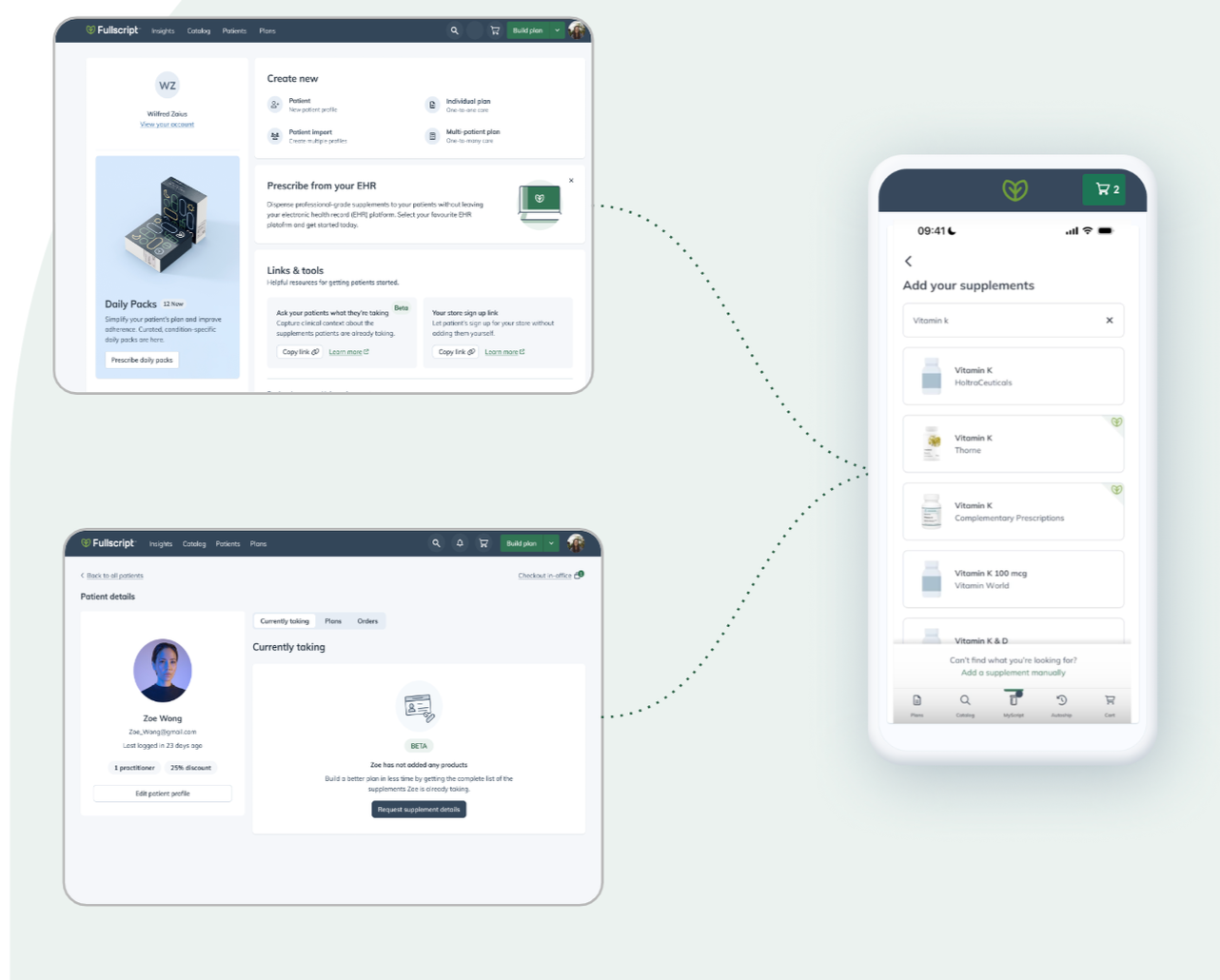
Decision: Controlled Beta vs. Broad Launch
The tension:
We were introducing a new behaviour, which is asking patients to actively log supplements on mobile. A broad rollout risked low engagement, unclear feedback, and noisy data.
The choice:
We handpicked 21 practitioners and their patients (42 accounts across modalities) for a structured beta release.
We intentionally included varied clinic sizes and practice types to test scalability across segments.
The tradeoff:
Slower initial exposure in exchange for higher-quality learning.
This allowed us to observe real-world usage before committing to full rollout.
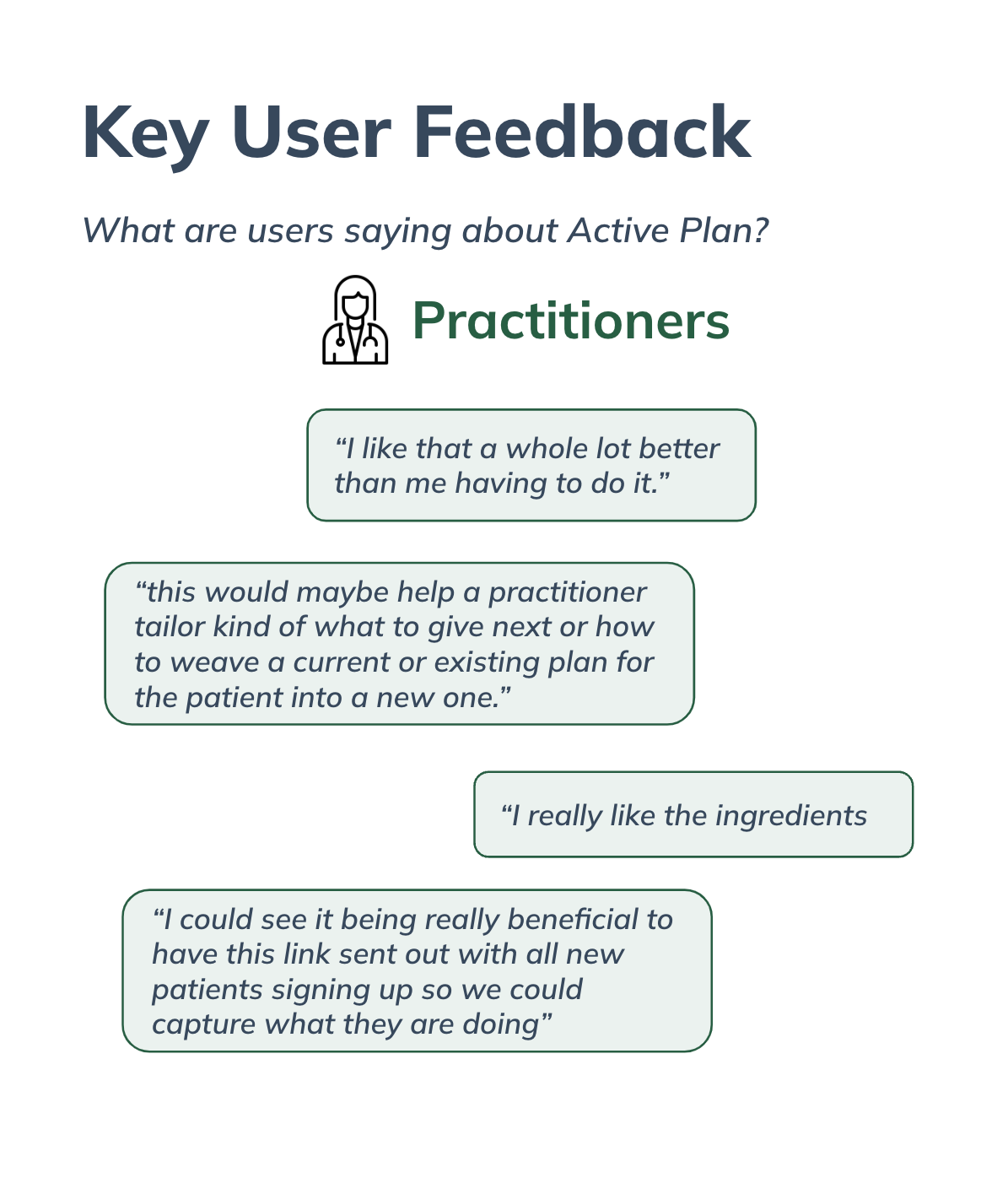
Decision: Learning Goals Before Growth Metrics
The tension:
Leadership wanted adoption signals. But early success metrics wouldn’t tell us why the feature worked or didn’t
The choice:
We defined clear beta goals:
Validate supplement capture behaviour in target segments
Identify feature gaps and bugs
Measure perceived value and usability
Assess early product–market fit
We treated this as a discovery sprint inside a live environment.
The tradeoff:
We prioritized insight depth over immediate scale KPIs.
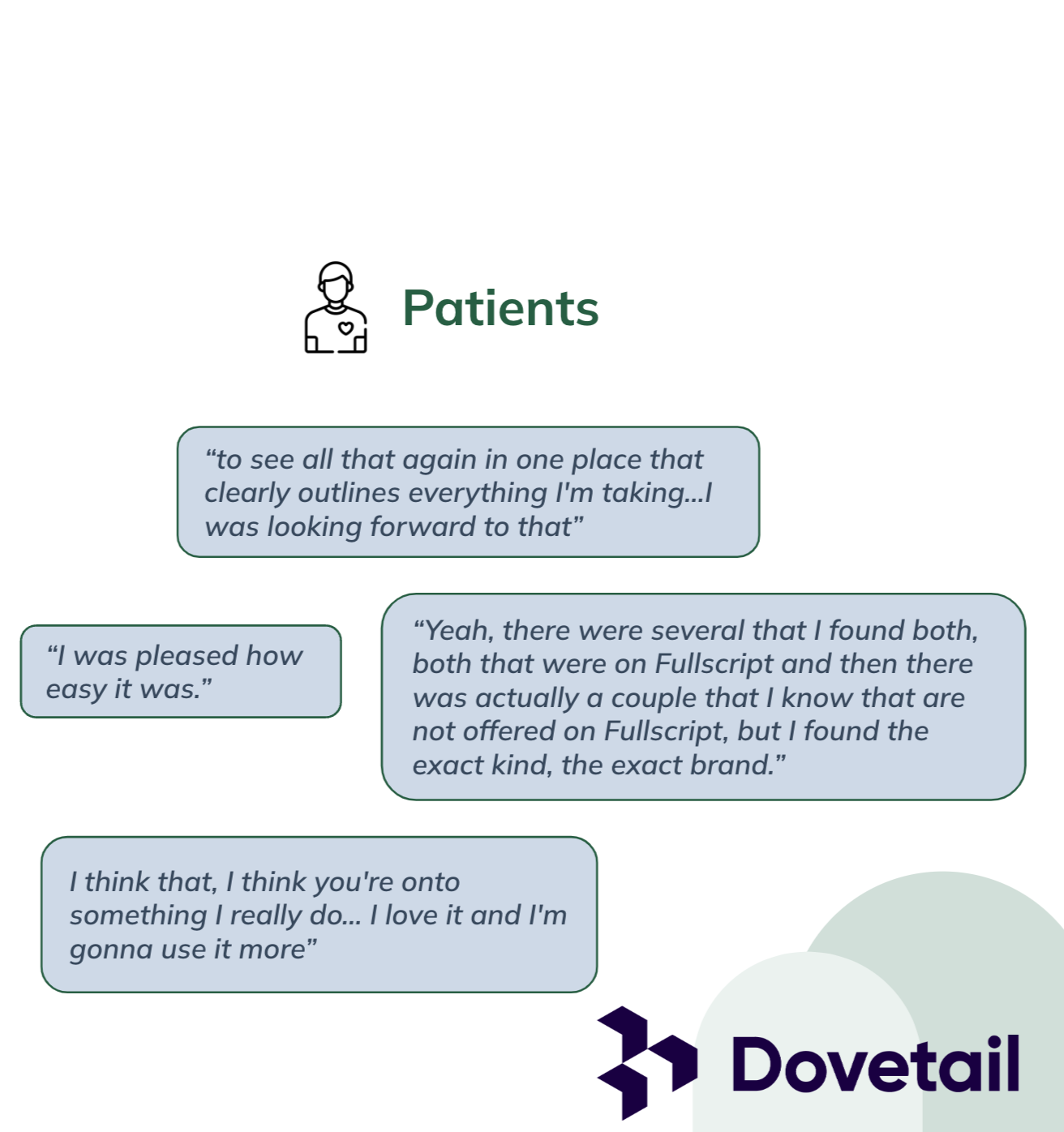
Decision: Two-Sided Validation
The tension:
This feature impacts both patients and practitioners. Optimizing for one side could create friction for the other.
The choice:
Beta feedback loops were structured to capture:
Patient ease of logging supplements on mobile
Practitioner trust in the captured data
Workflow impact on both sides
The tradeoff:
More coordination complexity — but stronger ecosystem validation.
RESULT
What shipped:
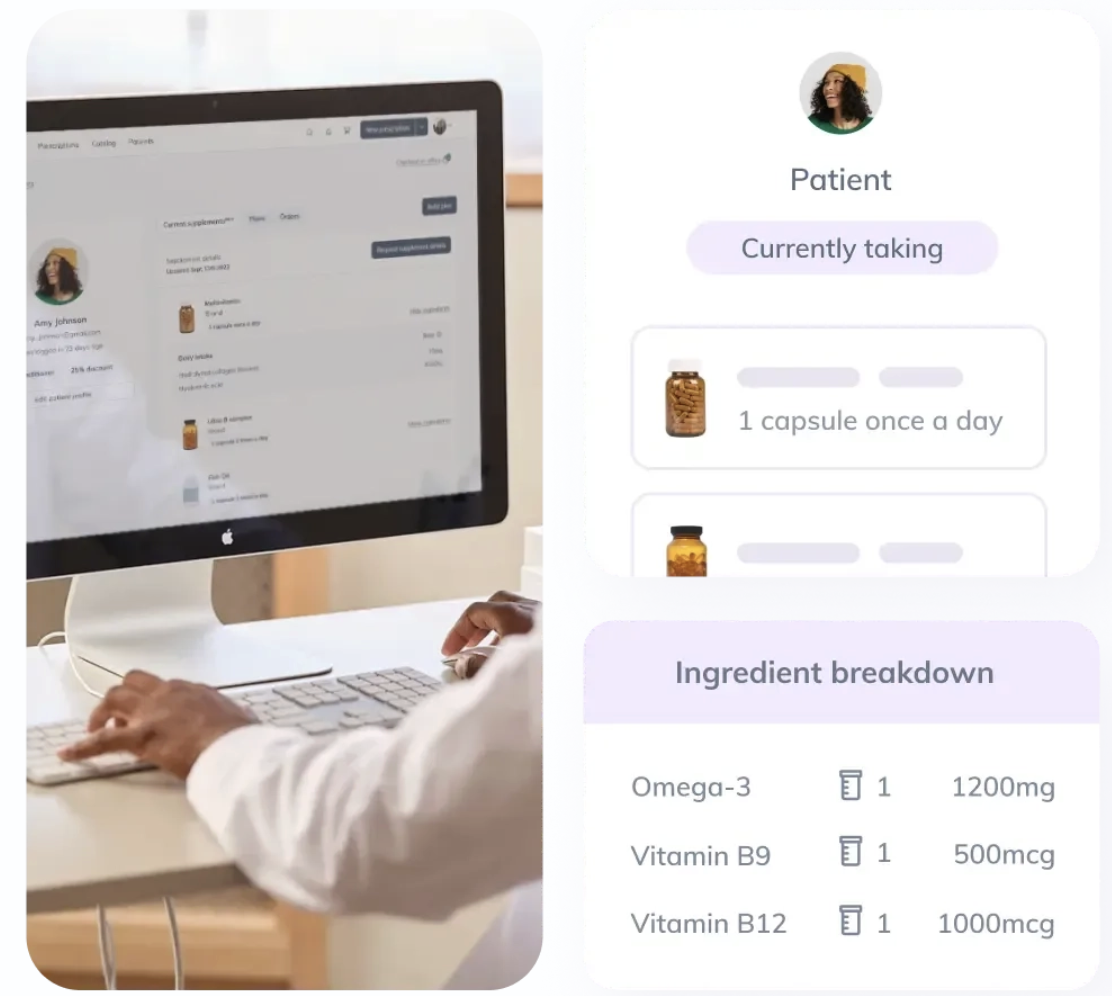
A mobile-first supplement logging experience for patients
Shared visibility of “Currently Taking” across patient and practitioner views
A structured beta program validating cross-segment adoption
Why it mattered:
Introduced patient participation into a previously practitioner-only workflow
Increased engagement between prescription moments
Strengthened Fullscript’s differentiation as a collaborative care platform
Established a foundation for future medication reconciliation and interaction tooling
What’s next?
With more scale and data, I would explore:
Barcode scanning or product recognition to reduce input friction
AI-assisted supplement matching and normalization
Progressive surfacing of interaction risks
A timeline view to understand changes over time
Adherence signals layered into practitioner dashboards
The beta validated the behavioural shift. The next opportunity would be turning supplement capture into longitudinal health intelligence.
What This Case Represents for Me
This wasn’t just a feature launch. it was:
My first high-visibility mobile release
A cross-platform transition moment
A crash course in stakeholder orchestration
A lesson in designing for longevity, not ownership
It stretched my adaptability more than my visual craft.
And that growth has shaped how I approach complex, multi-stakeholder projects today.